
Security and data sovereignty
Data sovereignty
Deployed in your cloud or on-premises, under your own accounts and security controls. The code, data and models are yours.
Data residency
Every location that stores or processes data is approved by your security team, and client data never trains a model.
AI governance
AI agents act only within the permissions you grant. Consequential actions wait for human approval, with a full audit trail.
Regulatory compliance
Documented against the frameworks you answer to, including the EU AI Act, ISO/IEC 42001, SOC 2 and GDPR.
Services
The full lifecycle of enterprise AI
-
Advise
Strategy, readiness and governance that settle what to build, in what order and under which controls, before engineering begins.
-
Build
Agents, LLM applications and AI products, engineered into infrastructure you control and measured against an agreed evaluation set.
-
Operate
Operations, integration and automation that keep systems dependable after release and extend them into the platforms where your teams work.
Top services
Approach
From first consultation to handover
Every engagement follows one delivery method. Each stage builds on the documented output of the stage before it.
-
Consultation
We begin with a structured consultation on the objective, the systems and data involved, and the regulatory and security constraints that apply. You leave with an initial view of feasibility, an indicative commercial range and a recommended next step.
-
Architecture review
The review examines the systems the solution must operate within and records the design in writing: responsibilities, permitted actions, approval gates, data flows and the evaluation criteria that will judge it. It concludes with a fixed scope and price, so your organization commits against a completed design.
-
Evaluation-led build
Evaluation criteria precede the features they cover and run continuously against every change. Each capability must meet an agreed definition of correct behavior, and progress is reported to your sponsors against those results. Every action the system takes is traced from the first build onward.
-
Deployment, observation, handover
We deploy into your environment under your security controls, then remain through the initial period of live operation, monitoring behavior under real conditions and resolving what evaluation did not anticipate. Handover concludes with complete operational documentation, and advisory and managed operations continue on retainer where required.
Work
From brief to production
-

Travel tech
Travel agencies book, get paid and close the month on one platform.
Booking engine, payments, back office and white-label portals for travel agencies, tour operators and corporate travel desks, delivered as one product in eight months.
Read the case study -
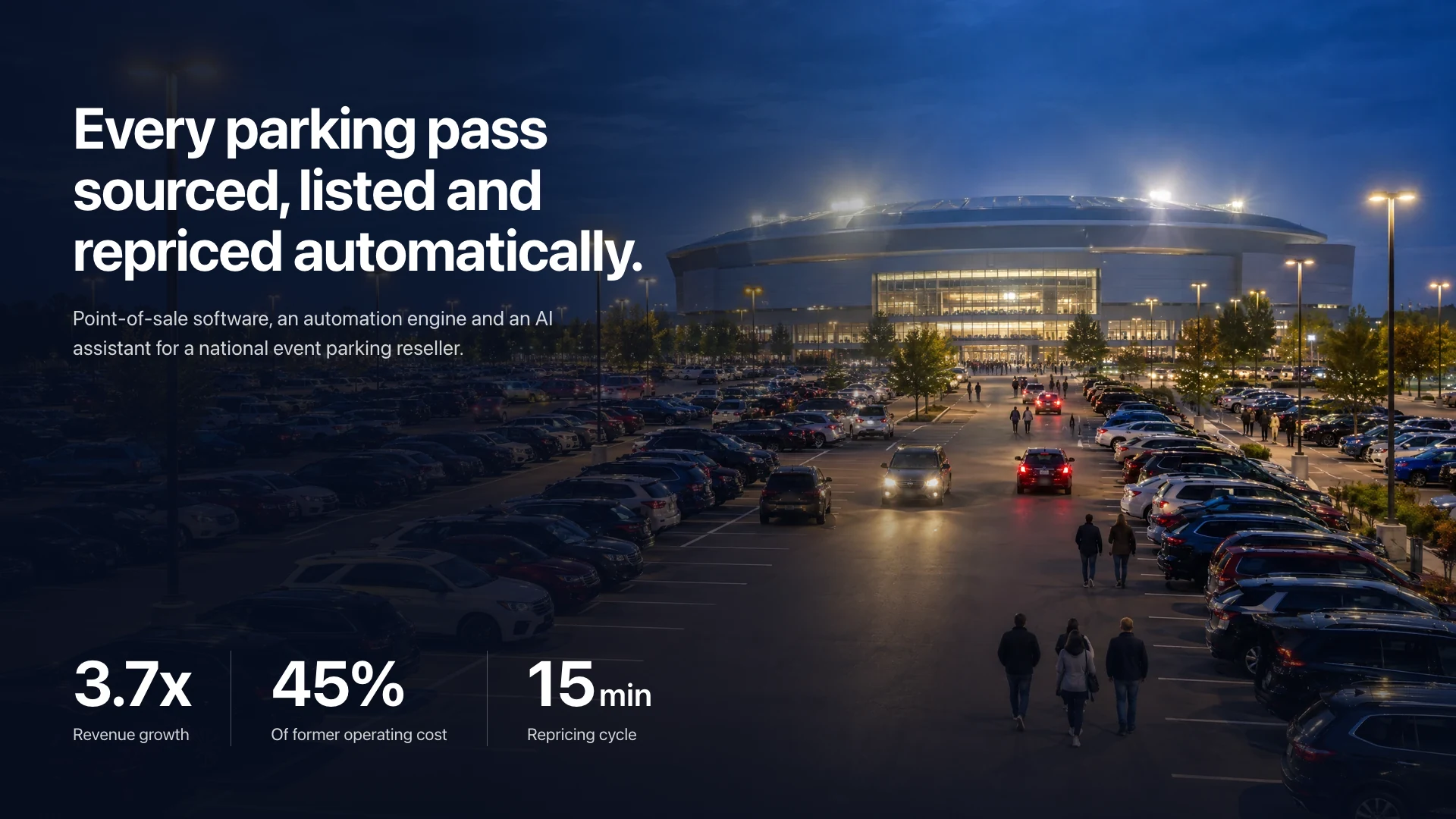
Ticketing
Event parking revenue up 3.7x, at 45% of the former operating cost.
We built and now operate point-of-sale software, an automation engine and an AI recommendation assistant for a national event parking reseller.
Read the case study -
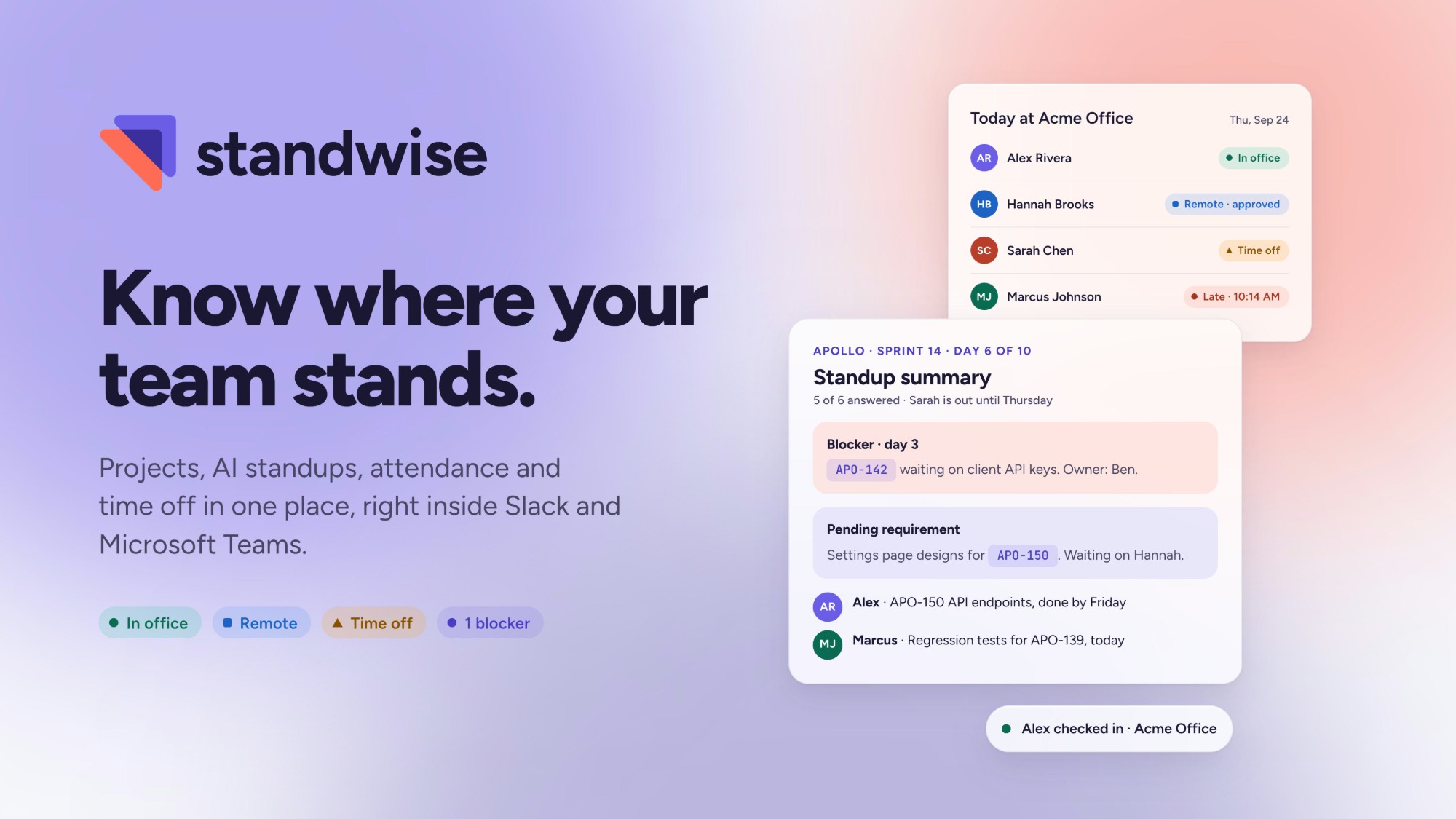
Technology
Daily standups cut from 25 minutes to 9, with every update traced.
Agentic standups, attendance and delivery reporting for a hybrid software services company, running in its existing chat and project tools during early access.
Read the case study
Security
Security engineered into every system.
Every system is built to pass an enterprise security review. Its controls are fixed in the architecture review, tested on every change and documented against the frameworks your organization answers to.
Frameworks we document against
- EU AI Act Details, official page, opens in a new tab
- NIST AI Risk Management Framework Details, official page, opens in a new tab
- ISO/IEC 42001 Details, official page, opens in a new tab
- ISO/IEC 27001 Details, official page, opens in a new tab
- SOC 2 Details, official page, opens in a new tab
- GDPR Details, official page, opens in a new tab
Questions before the first conversation
What does agentic AI mean in practice?
In an agentic system the model chooses a course of action and performs it through permitted tools: reading from internal systems, calling services and completing tasks of several steps. Because the model acts on systems of record, the engineering concentrates on controlling each action it takes as much as on the quality of its output. The architecture review specifies those controls and the evaluation set tests them throughout the build.
Who does ByteForge work with?
We work with large enterprises and mid-sized organizations that need AI systems to operate reliably in production, including those in regulated industries. Engagements are typically sponsored by executives accountable for technology, operations or risk. They suit organizations with established infrastructure and standing obligations to customers and regulators.
How long does a first system take?
The systems the product must integrate with, and the size of the evaluation set the use case needs, govern the timeline. The architecture review establishes both, and generally takes one to two weeks. A first system then reaches production in about twelve weeks. Where the integration surface is large or the evaluation set must be extensive, the review says so and adjusts the timeline before the build is priced.
How is the work priced?
Architecture reviews and builds are fixed-price engagements, and the review confirms the build price at its close. Advisory and operations that continue beyond the build run on a retainer. We share indicative ranges for each type of engagement in the first conversation, so leadership can assess fit before committing to a review.
Who owns the code, models and data?
The client owns them from the first week of the engagement. Accounts with model providers and cloud vendors are opened in the client's name, and the code, data and infrastructure of the system sit within them. Because the client holds every account, continued involvement from ByteForge is at the client's discretion.
Which models and stack do you use?
ByteForge is model-agnostic. We work with hosted frontier models, or with self-hosted open-weight models, and select between them on measured performance against the evaluation set, data-residency requirements and workload cost. Every model is placed behind an interface built for substitution, so when pricing, performance or policy shifts, the provider or version can be replaced and validated against the same evaluation set.
Can you work in regulated environments?
Regulated environments are supported by design. A compliance or security team will ask where data resides, who approved each consequential action, and which data the model saw for each decision. The architecture review answers all three in writing before any build begins. Those answers rest on controls fixed in the design, from data residency to approval gates and audit trails, and on our commitment that no client data trains a model.
How does an engagement begin?
An engagement begins with a technical consultation. An account of the process the system would support, the systems it would touch and any constraints on data or approvals is sufficient preparation. On that call we discuss feasibility and share indicative ranges for a review and for any build that follows. Where warranted, the next step is a short, fixed-scope architecture review whose proposal states what it will examine and deliver.
Begin with a consultation.
Request a consultation, or send a brief outline of the initiative. Both lead to the same first conversation.